Written by Erin McGivney, SVP, Global Client Lead at Momentum Worldwide
At some point, Black Friday stopped being a day and became an entire season.
The deals start in October. The countdown clocks resets. Every retailer promises its biggest sale of the year—only to offer something remarkably similar the following week.
Don’t get me wrong, people love a deal (I love a deal, tbh). And with shoppers paying closer attention to their budgets, price absolutely matters. But when every retailer is competing for the shoppers’ bottom line, how much differentiation is really left? What actually makes someone choose one brand over another?
Here’s something I found interesting in this year’s holiday shopping research. According to ICSC’s 2026 Holiday Intentions survey, 58% of shoppers expect to try a new brand this holiday season. At a time when brands are fighting harder than ever for shopper loyalty, more than half of consumers are open to going somewhere new. Which begs the question: if shoppers are willing to consider something different, what is your brand doing to make them choose you? I don’t think the answer is just another 20% off.
While brands and retailers continue to invest in faster, easier, more convenient ways to shop, consumers are reminding us that there’s still something valuable about the experience of shopping itself.
We’re seeing some evidence of this from Gen Z. According to PwC’s 2026 Holiday Outlook, 71% enjoy browsing in person. A generation that’s grown up with virtually everything available at the tap of a screen is actively choosing to spend time in stores.
And it’s not just Gen Z. Research shows that roughly a third of in-store holiday shoppers across generations consider shopping a social outing, often combining it with dining or entertainment.
Maybe shopping isn’t just about getting what we need as quickly as possible. Maybe there’s still something to be said for enjoying the process. The discovery. The anticipation. The ability to touch, taste, try and experience something before committing to it. Or simply the act of spending an afternoon shopping with and for the people you love.
The reasons people show up may be different, but the desire for something beyond a transaction isn’t exclusive to any one generation.
Have we become so focused on removing friction from shopping that we’ve forgotten some of what made it enjoyable in the first place?
Convenience and experience don’t have to compete. In fact, the best retail experiences often do both. They make shopping easier where it needs to be and more engaging where there’s an opportunity to make it memorable.
And that’s where Black Friday presents the biggest opportunity for brands—but also, the biggest “watch out” for those in experiential commerce. We’re really good at creating moments that attract attention. But are we giving enough thought to what happens after we’ve captured it?
It’s one thing to get a shopper to stop and engage. It’s another to have that interaction influence what they choose to buy. There’s a difference between creating an entertaining moment and creating an experience that actually moves someone toward a purchase.
We’ve seen some interesting examples of brands trying to connect those two things in recent years.
Last Black Friday, Target went beyond the usual “doorbusters” with surprise giveaways, exclusive product drops and an interactive in-store game. The exclusive merchandise tapped into existing fandoms, while the giveaways gave shoppers another reason to make the trip and see what they might discover.
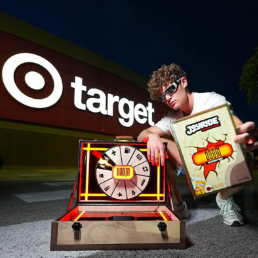
Image Credit: Ryan Trahan
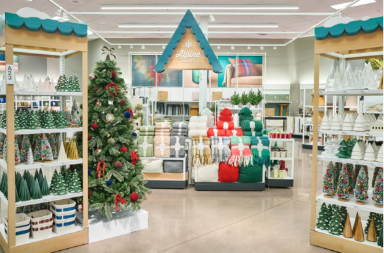
Image Credit: Target
Culture Kings took a different approach at their Las Vegas flagship, turning its basketball court into a Black Friday challenge. Customers who spent $200 or more could shoot baskets to earn store credit, with the option to keep playing and potentially double their winnings. The experience became entertainment for the whole store, complete with cheering crowds. But what I particularly like is that the experience was connected to the transaction itself, with rewards shoppers could redeem on future purchases.
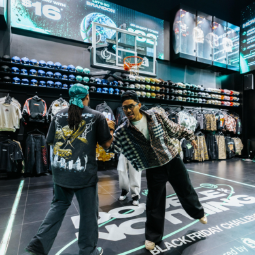
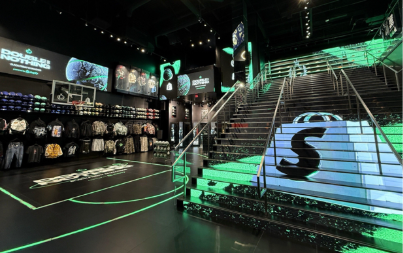
Image Credit: Shopify
Two very different approaches, but both are thinking about how the experience fits into the broader shopping occasion, rather than simply adding entertainment for entertainment’s sake.
And I think that’s the distinction we need to keep pushing for.
I’m not suggesting every brand needs an elaborate pop-up or an Instagram-worthy installation. Sometimes the simplest experiences are the most effective. It might be a product demonstration that gives someone confidence in their purchase. A personalized gift that makes the decision easier. An exclusive collaboration that gives someone a reason to choose your store over the one down the street.
And the same thinking applies online. How do we make discovery more engaging, help someone find the right gift or create opportunities for participation that actually influence what goes into the cart?
The opportunity isn’t to create the biggest experience or the most elaborate one. It’s to understand what matters to the shopper in that moment and design something that makes a difference.
Because a memorable experience is great. But a memorable experience that changes behavior? That’s where things get interesting.
Of course, the deals aren’t going anywhere, nor should they. As I said, we all love a deal.
But Black Friday creates a moment when millions of shoppers are actively making decisions about where to spend their time and money. And many are more open than ever to choosing something new. That’s a pretty great opportunity for brands willing to give them a reason.
Black Friday doesn’t need more spectacle or deals. It needs more reasons for shoppers to choose you. And if you get it right, it just might be the reason they come back.