Dearest gentle reader, as the season of roses and receipts dawns upon us once more, one cannot help but notice that Valentine’s Day has shed its former corsetry.
No longer cinched tightly by obligation or spectacle, the holiday now strolls about with a rather modern air: looser, freer, delightfully self-directed. Shoppers, it seems, are choosing for themselves—who to celebrate, how to indulge and whether to partake at all—favoring emotional return over performative spend. In this shifting courtship between consumer and commerce, we have taken it upon ourselves to search for the true diamond of the season: those experiential and retail moments that understand love not as a mandate, but as a choice.
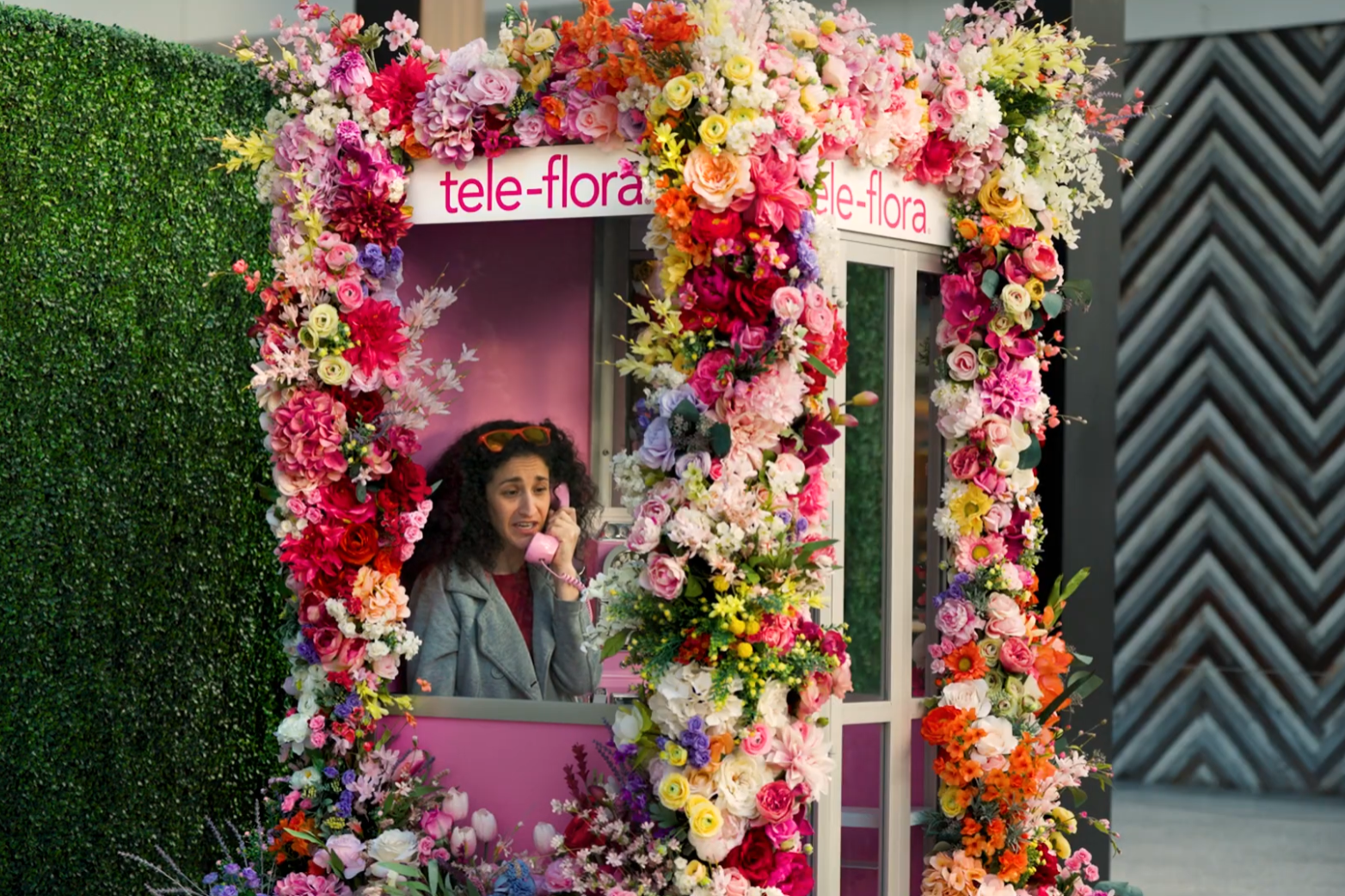
First, let us speak of tenderness—the warm, comforting sort that settles in rather than dazzles. This Valentine’s Day, value has become less about grandeur and more about reassurance and the quiet joy of feeling seen. Hallmark, ever the seasoned romantic, leans into this shift by spotlighting its expansive range of greeting cards and gifts, partnering with Katherine Schwarzenegger to underscore that meaningful connection extends well beyond romantic love, and that cards remain a simple but powerful medium for emotional expression. Teleflora, meanwhile, invites vulnerability to center stage with its “Love Out Loud” campaign, transforming a floral phone booth into a confessional where participants record heartfelt messages, receive a QR code linking to their recording and pair that sentiment with a bouquet, proving that the most powerful retail experiences are those that create space for feeling, not just spending. For brands, the lesson is clear: emotion is the currency, and experiences gain power when they move fluidly from physical activation to digital amplification.
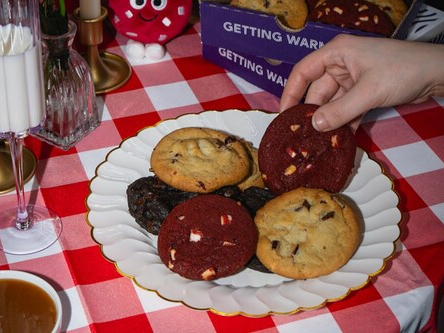
Image credit: Insomnia Cookies
Yet even the most tender hearts must mind their purse strings, and love—much like fashion—has been thoughtfully re-budgeted. With consumers approaching the holiday intentionally and without pressure, brands are responding from two ends of the spectrum. On the pragmatic side, 7-Eleven courts both the stay-in and go-out crowd with a nimble omnichannel dance, pairing $1 second sandwiches and cookies with app-based delivery discounts that let couples celebrate without financial strain. Insomnia Cookies, with a wink and a knowing sigh, transforms late-night cravings into an affordable indulgence, offering rewards members exclusive, pre-fixe date-night reservations that acknowledge romance should not require a second mortgage. Here, experiential commerce succeeds by easing friction and meeting consumers where they are—hungry, practical and still hopeful.
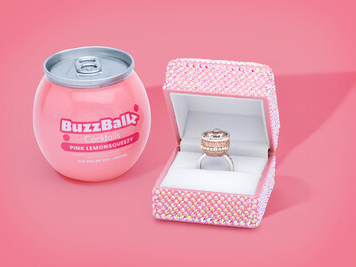
On the other end of the ballroom, luxury flirts shamelessly with accessibility. McDonald’s, in a move that would scandalize purists and delight everyone else, offers free caviar kits for nuggets, complete with mother-of-pearl spoons and Arch Cards, collapsing high and low into one perfectly shareable moment. BuzzBallz, never one to shy from drama, auctions a $35,000 diamond engagement ring modeled after its spherical can timed to the launch of the brand’s newest flavor, Pink Lemonsqueezy, turning kitsch into couture with a sense of humor intact. Dave & Buster’s ups the ante further, hiding five $15,000 engagement rings inside its Human Crane games, making the act of play the proposal. These moments remind brands that luxury need not be distant—it can be playful, participatory and profoundly memorable when wrapped in experience.
Of course, romance is no longer the sole guest at this fête. Love now arrives with friends, coworkers, pickleball partners and one’s own reflection. Ghirardelli’s charming Chocolockets—free, shareable and labeled for every imaginable duo—celebrate connection in all its forms while quietly encouraging self-gifting and communal joy. Zales, partnering with Sweethearts®, turns affirmation into fine jewelry through mystery blind boxes that reward the wearer with messages meant as much for oneself as for others. Wendy’s, with its $1 Dave’s Single on Singles Awareness Day that immediately follows Valentine’s Day, cheekily extends the invitation to everyone, proving inclusivity and humor are powerful drivers of participation. Even Einstein Bros. Bagels addresses a deeper cultural gap—revealed by research showing 88% of men have never received flowers—by introducing “Bro-quets,” reframing gifting norms through a playful, food-based alternative. Here, experiential retail thrives by broadening the definition of who Valentine’s is for—and why.
And let us not forget those with paws instead of partners. For many, the most steadfast Valentine arrives on four legs, and brands are taking note. Jinx makes a grand entrance into cat food by hosting “The Purrfect Match,” an invite-only, cat-first social experience during New York Fashion Week that blends dating culture, adoptable kittens and on-site gifting into a charming filter for human connection. Tropical Smoothie Café, meanwhile, offers its Fur-Ever Duo, pairing a Puppy Power Bowl with a Chocolate Covered Strawberry Smoothie to ensure pets are properly pampered. Love, after all, is unconditional—and experiential commerce that honors that bond earns devotion in return.
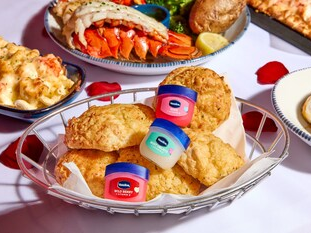
Image credit: Red Lobster and Vaseline
As intentions grow more personal, partnerships have emerged as the most elegant matchmakers. Red Lobster and Vaseline debut a reservation-only Kissing Booth in Times Square, where seafood, cocktails and lip care converge into a multi-sensory crescendo that ends, naturally, with a kiss-ready takeaway. Tous les Jours teams with Rakuten Viki to blend cakes and K-dramas, rewarding purchases with entertainment and sweeping a lucky few into a yearlong romance with both brands. Ghirardelli, ever the overachiever, joins McBride Sisters for a “Bubbly Baking Hour,” pairing wine and chocolate through co-branded displays and digital storytelling that invite consumers to create moments at home. Bloomingdale’s, in partnership with Warner Bros. Discovery, transforms its Carousel space into a moody, romantic homage to Wuthering Heights, proving retail can still transport when it dares to tell a story. These unions demonstrate how experiential commerce flourishes when brands collaborate to meet multiple emotional and functional needs at once.
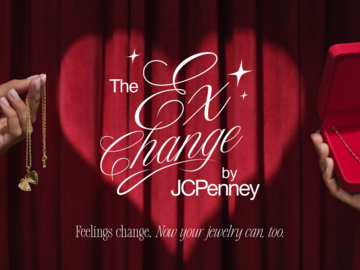
And yet, dear reader, not all hearts are tender this time of year. Some seek catharsis rather than chocolates. JCPenney’s Ex-Change invites shoppers to trade relics of past loves for a lab-grown diamond necklace—closure, but make it retail. Angry Orchard follows suit with its own Ex-Change, offering cash toward cider in return for shipping away an ex’s forgotten belongings. These activations acknowledge that Valentine’s Day is not solely about romance, but release, proving that even heartbreak can be thoughtfully—and profitably—designed.
So, have we found the diamond of the season? Perhaps not a single gem, but a constellation of them. For brands willing to listen closely, Valentine’s Day 2026 reveals a truth worth courting: the most enduring experiences are those that honor choice, emotion and participation. In that, my dear reader, lies the real sparkle.
Written by Fiona Sha, Senior Strategist, New York, at Momentum Worldwide