Written by Alessandro Camaioni, Head of Commerce Strategy, Europe, and James Cahill, UK Creative Director, Experiential Commerce, at Momentum.
Is Retail’s Wellness Reset Serving Shoppers or Selling Anxiety? Experiential Commerce, the discipline of designing in-store moments that convert real shopper behaviour into loyalty, sits at the centre of this debate.
As retailers’ wellness strategy shifts from January to September, the question is whether Experiential Commerce is meeting real shopper needs or manufacturing demand. Alessandro Camaioni and James Cahill ‘agree to disagree’ about what the industry should do.
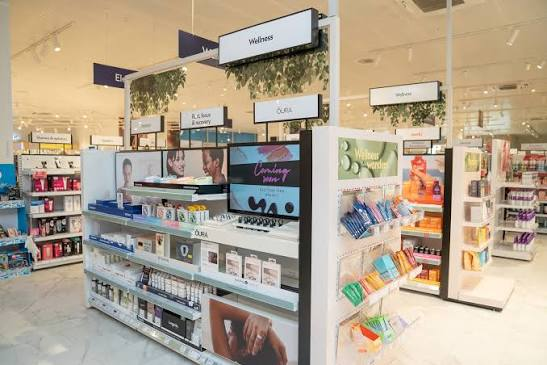
Boots has decided September is the new January, and the data backs it up rather well. Its own research this August found 44% of Brits now see September as the moment to properly restart healthy habits, and almost half admit they regret not investing in their wellbeing before previous winters. Advantage Card sales prove it at the shelf: cough and cold remedies go up around 70% in August, diagnostics up over 40%, immunity supplements up 25%. Against this background, Boots has launched Give It Some Boots, a platform built on Wellness Zones, hundreds of new product lines and more trained health advisors in-store, dressed in glossy creative about menopause, parenthood and ageing. Boots itself says the Wellness Zones exist to help customers “navigate the expanding wellness category with greater confidence,”, which is exactly the promise worth holding it to.
That’s a compelling story for PR. But what’s less clear is if the shopper walking into these Wellness Zones this September is the same shopper Boots was building its strategy on last January.
NIQ’s global 2026 Health & Wellness report found GLP-1 users might be just 4.5% of households, but they drove 43% of sales growth in muscle-health-claim products, spend 15% more per trip and 7.7% more annually than everyone else, despite shopping less often. Meanwhile, the Guardian’s grocery data from earlier this year showed shoppers happily paying nearly four times the price of a standard soft drink for functional drinks promising energy, gut health or mood boosts. And the same NIQ report that flagged the GLP-1 effect also found shoppers demanding actual proof: biomarkers, wearable data and ingredient transparency are their new lifestyle compass. That’s the paradox retail has to sell into this September: shoppers seem ready to pay a premium for a feeling, but increasingly want evidence that the feeling is real.
(Credit: Boots UK)
AC: Hurray! Retail has finally caught up with its own shopper.
For the first time in a while, the aisle is roughly where the shopper actually is. Boots isn’t guessing that September matters, it measured it, then built Wellness Zones and hired advisors to act on the measurement. That’s Experiential Commerce (XC) working as intended.
The GLP-1 shift is the sharpest example. A cohort that’s still relatively small driving such disproportionate growth in an entire category represents a structural change in what ‘healthy shopping’ means. And retailers who build genuinely useful missions around it (portion guidance, protein bundles, staff who actually know what they’re talking about) are meeting real behaviour rather than manufacturing it.
And wellness seems to have become a retailer strategy in its own right. IGD’s own analysis of Aldi and Lidl flags wellness as an “underserved category” for both discounters, explicitly stating that expanding supplement, vitamin and sleep ranges “would drive footfall.” Tesco has already moved on that logic, trialling health zones that combine wellness products with pharmacy services and consultation rooms, a tactic IGD names directly as a way to make store space more productive against discount expansion. The industry’s own analysts seem to agree with me that wellness is the very category retailers are choosing to compete on.
The proof-demand shift should be welcomed too, not feared. Shoppers wanting evidence before they trust a claim will reward retailers who curate honestly and punish those who don’t. September Reset then seems less of a marketing invention and more like retail finally building infrastructure around a shopper who was already there.
JC: Ah! Convenient timing, inconvenient questions.
I’d enjoy that argument more if the timing weren’t quite so useful. Shoppers who regret neglecting their health, who are mid-way through a GLP-1 course with genuinely altered nutrient needs and who have already proven they’ll pay four times the going rate for a drink that promises to fix her mood, walk into a store reorganised specifically to catch them in that mindset. Isn’t all that banking on vulnerability a bit too obvious?!
Start with the GLP-1 point. People on appetite-suppressing medication have real, specific dietary needs, and a high-spend per trip from a small cohort is exactly the kind of number that gets a merchandising team excited before anyone asks whether the protein bar wall being built for them is clinically sensible or just commercially obvious. Reports tell us that shoppers want proof before they buy into a claim, immune blends, gummy vitamins and generic wellness SKUs: precisely the category Boots is expanding by hundreds of lines. Building more of exactly the thing data says shoppers are getting sceptical about looks like a bet that they won’t do their research before walking down the aisle.
Then there’s the XC problem. Boots says Wellness Zones exist to help shoppers navigate the category “with greater confidence.” The format on record so far is a pick-and-mix-style selection of tasters from brands like Humantra, Zooki and Dirtea, across six stores. That’s a discovery format, sampling as many things as possible, which is a perfectly good idea for a beauty counter and a slightly stranger one for a shopper trying to make a clear, confident decision about her actual health. A wall of tasters doesn’t obviously reduce the number of decisions she’s making; it multiplies the options she’s sampling. If the promise is confidence and clarity, the format needs to be judged against that promise, not against how good the launch photography looks.
And the wellness-as-footfall-driver argument cuts both ways, too. If IGD’s own analysts are telling retailers that wellness assortment expansion drives footfall, and Tesco’s health zones are a named tactic for making space ‘perform’ against discount competition, then wellness has become a productivity lever for retail property, not just a service to shoppers. Both things can be true, footfall driver and useful service, but it’s worth being honest that the motive is commercial before even considering it’s done with shoppers’ real needs in mind.
Where we land.
Neither of us thinks retail should ignore a shopper who has genuinely changed, whether that’s a GLP-1 prescription, a protein obsession, or a renewed scepticism about conflicting and vague wellness claims. Our cheerful, friendly disagreement is about who the reset is actually designed for. Built around evidence, honest hierarchy and real clinical guardrails, Experiential Commerce turns a structural shift in shopper behaviour into a genuinely useful winter service. Built around basket size and square footage that needs to earn its keep, it turns the same shift into the most sophisticated version yet of selling someone back their own anxiety.
The wellness reset is here. But its success will depend on whether retailers support healthier choices or simply create new reasons to worry. Marketers should focus on evidence-led, genuinely useful experiences that meet shoppers where they are and build trust beyond the shelf.
Want to learn more? Get in touch via [email protected]